Define one customer type and one service package, then check insurance, local requirements and the true time per job. Test pricing on a small route and prioritise recurring customers.
Cleaning & Home Service Guides
Before you spend money
Use these three questions to turn the guide into a decision, not just a reading list.
- Does the scope require specialist training, insurance or safety controls?
- Does the price cover travel, setup, labour, supplies and callbacks?
- Can jobs be grouped into a compact route with repeat demand?
You can start a pressure washing business by offering one repeatable exterior-cleaning service, verifying local licence and wastewater rules, learning safe surface-specific methods, and testing paid jobs with rented or entry-level equipment. Do not promise every surface or buy a large rig until you can quote, protect property and complete the work consistently.
Choose a narrow first service
| Service | Typical decision | Risk to control |
|---|---|---|
| Residential flatwork | Driveways, paths and patios | Runoff, surface damage and nearby property |
| House exterior cleaning | Material and low-pressure method | Water intrusion, oxidation and landscaping |
| Commercial exterior cleaning | Scope, access and operating hours | Public safety, wastewater and contract requirements |
| Specialty work | Roof, wood, fleet or industrial surface | Higher training, chemical and liability exposure |
Start with surfaces you can inspect and clean safely. Pressure alone is not expertise; the correct method may involve lower pressure, different chemistry or declining the job.
1. Learn surface and chemical safety
Practice on controlled surfaces and follow equipment and chemical labels. Write a pre-job inspection that records cracks, loose mortar, failing paint, oxidation, electrical hazards, open windows, drainage and sensitive landscaping. Photograph existing conditions with the customer’s permission.
Review the OSHA small-business resources for workplace safety planning. If you hire workers, fall protection, chemical communication, personal protective equipment and equipment training may apply to the work you perform.
2. Check business, contractor and local rules
Use the SBA licence and permit guide as a starting point, then ask your state and local agencies whether a general business licence, contractor registration, sales-tax registration or special permit applies. Rules change with the type and value of work.
Check restrictions on water use, noise, working hours and work in public areas. Do not describe yourself as licensed, bonded or certified unless the exact credential is current and applies to the offered service.
3. Make a wastewater plan before quoting
Wash water can contain detergent, oil, paint particles, sediment and other pollutants. The EPA explains that stormwater discharges are regulated under the NPDES stormwater program, while state and local authorities may impose more specific collection and disposal rules. A storm drain is not the same as a sanitary sewer.
Identify drains and slope during the site visit. Determine whether water must be blocked, recovered, filtered or disposed through an approved route. Get the local rule in writing when possible and include the required method in the quote.
4. Choose equipment from the service, not the advertisement
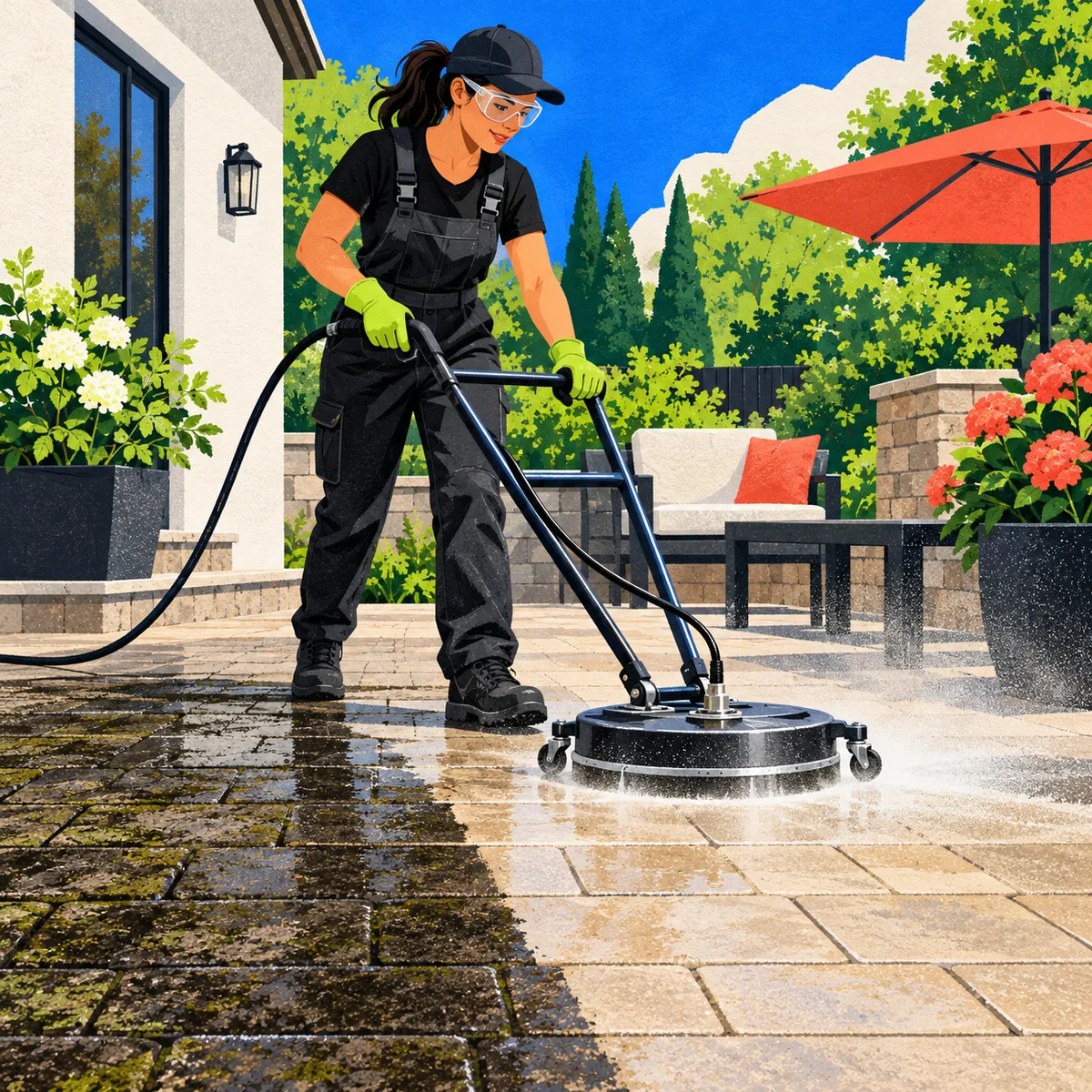
Build the minimum complete system for the chosen jobs: washer, hoses, nozzles, surface cleaner where appropriate, water-supply checks, chemical application, personal protective equipment, warning signs and a transport method that stays within vehicle and trailer limits. Include spare fittings and a shutdown plan.
Renting can reveal whether demand and workflow justify ownership. Compare purchase price with maintenance, fuel, storage, transport and downtime—not only pressure and flow specifications.
5. Set a repeatable site-visit and quote process
Every quote should record surface type and area, contamination, water access, drainage, obstacles, protection, method, exclusions and expected result. State that some stains or pre-existing damage may remain. Define who moves furniture and how changes are approved.
Estimate labour, travel, setup, protection, cleaning, recovery, pack-down and disposal. A per-square-foot number can support the calculation, but it should not replace inspection of complexity and risk.
6. Calculate contribution per job
Job price − chemicals and consumables − fuel and travel − payment fees − disposal or recovery cost − direct labour = contribution before insurance, equipment, marketing, tax and profit.
Record setup and travel time, not only spray time. Separate business transactions and review federal tax basics through the IRS starting-a-business hub.
7. Arrange insurance for the actual work
Discuss general liability, vehicle use, equipment, employees and subcontractors with a licensed insurance professional. Describe the surfaces, heights, chemicals and commercial work honestly. A generic policy may exclude work you assumed was covered.
8. Build proof from controlled jobs
Use a written scope and obtain permission before publishing photographs. Show the surface and method, not only a dramatic crop. Ask the customer to confirm completion and document any concern immediately. Never fabricate reviews or use photographs from another contractor.
9. Find first customers in a compact area
Start with one service area to reduce travel. Use local partnerships, direct outreach and accurate business listings. A clear offer—surface, result, exclusions and booking process—is easier to refer than “we clean everything.”
10. Scale only after quality is repeatable
Track quote-to-job rate, average contribution, travel time, rework, damage incidents, chemical use and equipment downtime. Add equipment or labour only when a measured constraint justifies it.
For a related route-based service, compare travel and recurring-account decisions in the window-cleaning guide. For broader exterior projects, review scope control in the painting business guide.
Pressure washing startup checklist
- One defined first service and surface type
- Safe operating and pre-inspection procedure
- Local licences, contractor rules and water restrictions checked
- Wastewater route planned for every job
- Equipment matched to the service and transport limits
- Written quote, exclusions and change process
- Insurance reviewed against the actual work
- Job-level contribution and quality metrics tracked
Frequently asked questions
Can I start with rented equipment?
Yes, if the rental equipment suits the job and you include pickup, return and downtime in the quote. Renting can be a useful demand test before a large purchase.
Do I need a contractor licence?
It depends on the state, locality and scope. Cleaning alone may be treated differently from repair, coating, roof or higher-value contract work. Verify the actual offer where you operate.
Can wash water go into a storm drain?
Do not assume it can. Identify the pollutants, drain type and applicable municipal, state and federal requirements before work begins.
Use these official starting points to verify current rules. The linked agencies cover the United States; elsewhere, check the equivalent national and local authorities. Prices, costs and market figures in this guide are planning estimates unless a nearby citation says otherwise.